Shifting the Attitude, to top the Summit- Women Empowerment in Action
Badiriya Hussien is a resident of Amuma Arago Kebele, Guna Woreda, Arsi Zone, Oromia Region. She is a member of a Self-Help Group (SHG) in her location. She is part of the CCRDA/ David and Lucile Packard foundation partnership project that has been running with the goal of creating and strengthening an enabling environment for expanding quality Reproductive Health Family Planning (RH/FP) service provision.
The project is being implemented by Education for Development Association (EFDA), a member organization, in Guna Woreda. EFDA uses community conversations as an approach to facilitate dialogue and foster understanding among community members. This method allows for the identification of community needs and the development of strategies to address these needs.
Badiriya and other women in reproductive age groups were organized into groups based on their neighborhood. Their groups underwent six dialogue sessions before graduating and transforming into SHGs at their localities.
EFDA identifies potential SHG members within the community and helps transform these community conversation teams into SHGs by providing financial support. SHGs are small voluntary associations of people, usually from the same socioeconomic background, who come together for the purpose of solving their common problems.
Badiriya stated about her journey as a member of SHG, “The SHG was formed as part of the collaboration of EFDA and HEW-facilitated discussions and learning sessions. After completing these discussions, the members determined to stay organized and continuing their collective effort”.
Badiriya added that “I am an empowered individual who believes in collective strength and mutual support. I actively participate in our SHG meetings, contribute to savings, and engage in income-generating activities. My journey involves learning, sharing, and uplifting fellow members. Together, we strive for financial independence, community development, and positive change.”
Regarding empowerment and confidence Badriya said that “as a group, we’ve grown in confidence. We actively participate in decision making, voice our opinions, and take charge of our lives. Women find their voices amplified within the SHG.”
Badiriya stated that, SHGs women refer their peers to health facilities when needed. For instance: If a woman experiences reproductive morbidities such as menstrual disorders, infections, SHG members guide her to seek professional care. According to her, this referral system bridges the gap between community knowledge and formal health services.
Establishment of Self-Help Groups (SHGs)
EFDA in collaboration with Health Extension Worker (HEW) provides training and orientation to SHG members. This includes understanding SHG principles, financial literacy, and group dynamics. SHG members gain skills necessary for effective functioning. EFDA ensures that SHGs are equitable platforms.
They facilitate health interventions leading to improved reproductive, maternal, neonatal, and child health practices. Participation in SHGs enhances women’s ability to control resources, participate in community decision-making, and make informed choices about reproductive health.
Furthermore, SHGs serve as a support system, enabling women to accompany each other for RH/FP service and share vital health information. They foster collective efficacy, enhancing the group’s belief in their ability to organize and execute actions effectively. Thus, SHGs significantly contribute to women’s health and empowerment.
SHG and RH/FP
SHGs empower women by fostering self-reliance, solidarity, and mutual support. As SHG members gain confidence, they become advocates for their own health.
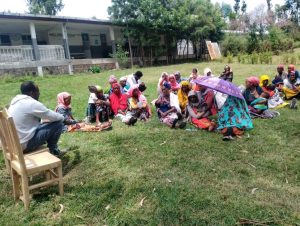
Through SHGs, women receive health education on reproductive matters. This awareness extends to family planning methods, maternal health, and childcare. Trained SHG women play a pivotal role in disseminating health information. They conduct sessions on reproductive health for other women in the community. These sessions cover topics such as safe motherhood, contraceptive options, nutrition during pregnancy, and child immunization.
According to the EFDA, four SHG groups are now functioning, with eight SHG groups in the process of being established. The number of SHG members varies from group to group. Each SHG can have between 25 and 45 members. As an instance, Badiriya is a member of a SHG comprising 27 women.
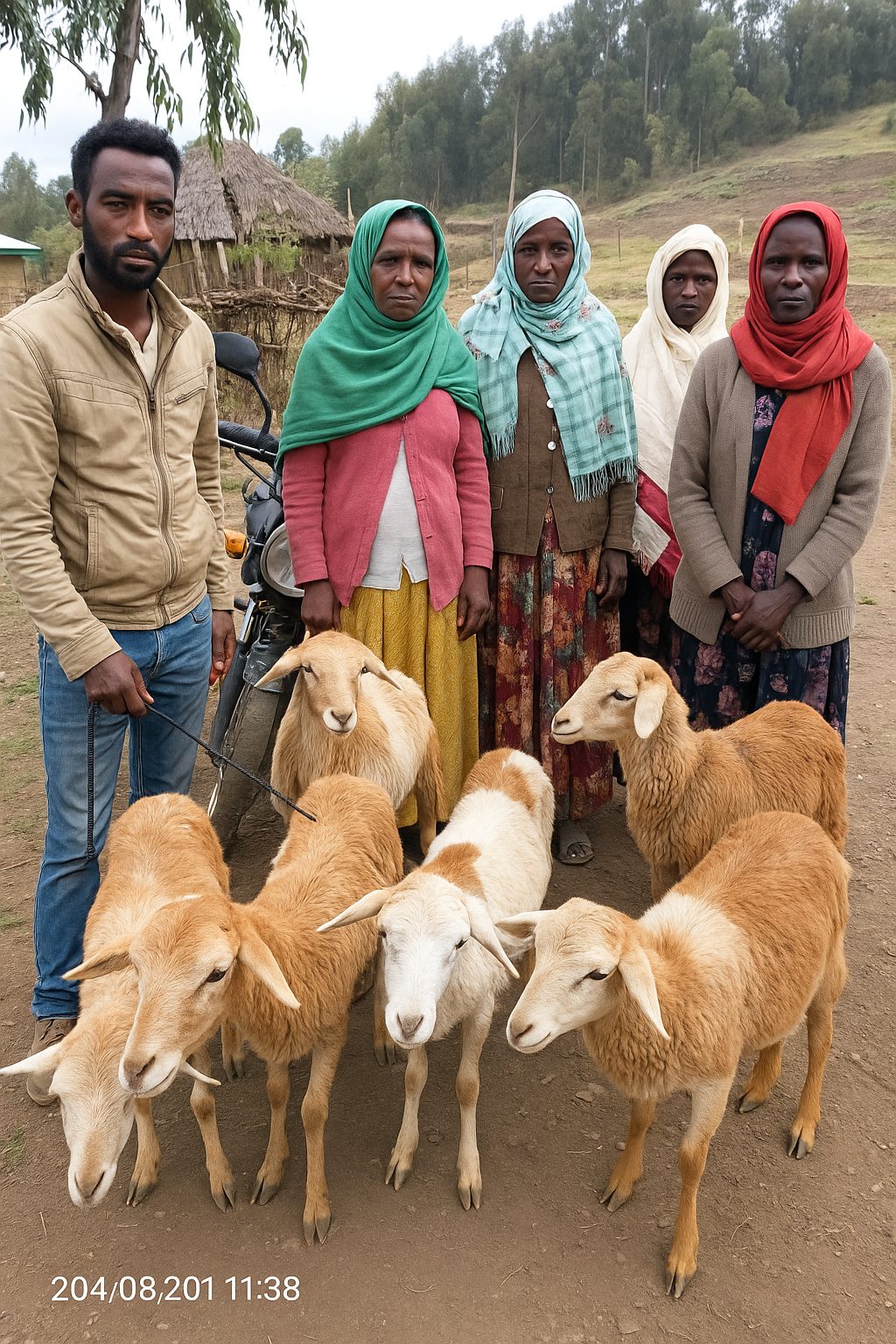
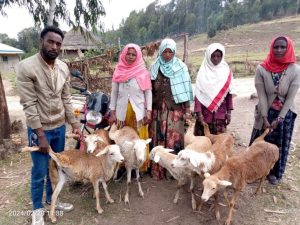
The SHG saving techniques include monthly savings of varying amounts ranging from 50 to 100 birr. They have a chairperson, a note-taker, and a cashier. Those three individuals were chosen by members through votes. Regarding income-generating activities of SHGs, the SHG chaired by Badiriya concentrates on sheep fattening, as do the other two SHGs, while one is focused on farming.
Then they maintain their account for a year, and then they start buying sheep for each group member.
SHGs sustainability
SHGs empower women by fostering self-reliance, solidarity, and mutual
support. When SHGs are sustainable, they continue to promote economic activities, savings, and income generation. SHGs provide access to credit and financial services. Sustainable SHGs continue to function as microfinance institutions, benefiting members and their communities.
According to EFDA it guides these SHGs towards sustainability, ensuring they continue to function and provide benefits to their members even after the initial facilitating project ends. There is a well-planned handover strategy in place. They also stated that they planned to expand the initiatives of the SHG to other areas.
SHGs need further external support to ensure their viability. SHGs necessitate continuing technical help, mentoring, and capacity building support. NGOs, government bodies, and development partners should play critical roles.
The CCRDA/David and Lucile Packard foundation partnership project has been running in Oromia region, Arsi Zone Jeju, Merti, Guna, and Chole Woredas, with the goal of creating and strengthening an enabling environment for expanding quality RH/FP service provision.