Redesigning the Agroecological Practice – a Call for Prevention Before the Cure
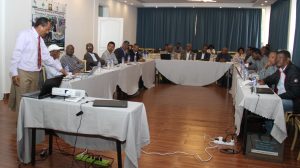
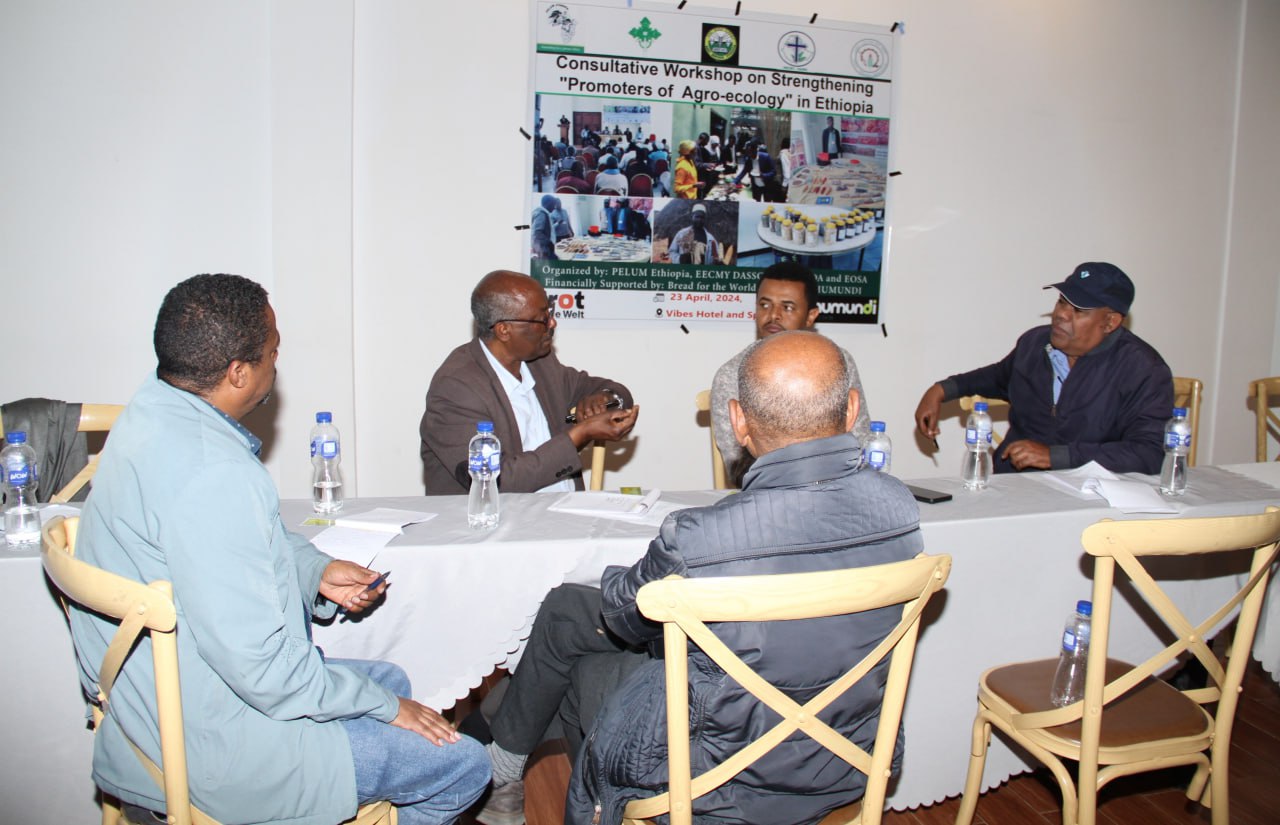
A Consultative Workshop was convened on April 23, 2024, to strengthening promotors of Agroecology in Ethiopia.
The workshop was organized by CCRDA, PELUM Ethiopia, Ethiopian Evangelical Church Mekane Yesus Development and Social Services Commission (EECMY DASSC), Agri Service Ethiopia (ASE) and Ethiopian Organic Seed Association (EOSA). PELUM Ethiopia hosted the event at Vibes Hotel in Addis Ababa.
The objective of the workshop was to discuss good practices of CSOs that have the potential for replication and scaling up in future. It was also to develop the 2024 road map for agroecology promotors that can gradually evolve into strategies.
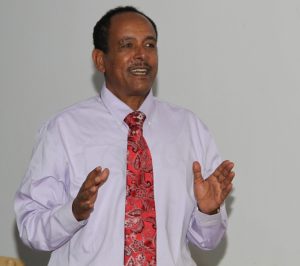
Hailu Araya (PhD), Executive Director of PELUM Ethiopia
Hailu Araya (PhD), Executive Director of PELUM Ethiopia, gave a brief presentation on the issues facing Ethiopian agriculture in terms of agricultural input and soil health. Sale Wassie, CCRDA’s Senior Director for Resource Mobilization, Partnership Promotion and Contract Management Core Team, presented the Ethiopian Agrobiodiversity Seed and Food Fair, which had been held last year January 2023.
Additionally, this one-day workshop featured group discussions and reflections to gathering inputs for the development of the road map.
The event was attended by researchers with expertise in agriculture and ecology, invited CSOs, relevant stakeholders, and farmers from Oromia Region.
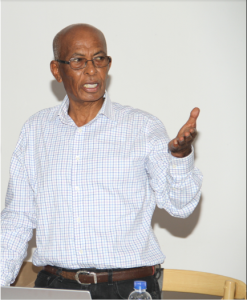
Regassa Feyissa (PhD) Executive Director of EOSA
On his opening remarks Regassa Feyissa (PhD), Executive Director of EOSA, stated that Agroecology represents an overarching and comprehensive systems framework to guide public policies towards sustainable agriculture and food systems that has the potential impact on our daily lives.
He stated that, “to deliver contextualized solutions to local problems with people at the center, we must collaborate and work in partnership for common goals. The event planned to increase collaboration among like-minded organizations while also providing input for policymakers, researchers, and other stakeholders.”
Hailu Araya (PhD), Executive Director of PELUM Ethiopia, also gave a brief presentation on issues associated with the Ethiopian agriculture. He talked about agricultural input and soil health, as well as potential solutions for rebuilding the food system in a manner that is sustainable and equitable for all.
According to the Executive Director, reducing reliance on purchased industrial inputs and increasing substituting alternative practices for industrial inputs and practices, redesigning the entire ecology-based practices and processes, and re-establishing the connections between producers and consumers for self-sufficiency, can collectively contribute to rebuilding a sustainable and equitable global food system.
Furthermore, he stated that “we must redesign the agroecological practices so that it functions based on a new set of ecological processes. The focus should be on prevention of problems before they occur, rather than trying to control them after they happen.” For this, the director explains, maintenance and enhancement of diversity of species (functional diversity), and preservation of genetic resources would enhance the positive ecological interaction and systemic resilience of agroecosystems in extreme weather events due to climate change and other disturbances.
He finally emphasizes the negative impact that occurs on the environment as a result of application of chemicals such as fertilizers. According to the director, working with local people and communities to promote good agroecological practices at grassroot levels followed by lobbying and advocacy, as well as good collaboration with government bodies would be a long-term and cost-effective approach to bring lasting solutions.
Sale Wassie, CCRDA, Senior Director for RMPP & CM Core Team, gave highlights on first Ethiopian agrobiodiversity Seed and food fair, which was organized by Agroecology promoters and held on 26 January 2023 at Ghion Hotel.
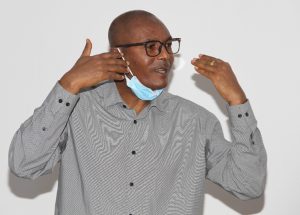
Sale Wassie, CCRDA’s Senior Director for Resource Mobilization, Partnership Promotion and Contract Management Core Team
According to him, the fair was organized with the aim to create awareness to partners who actively engage in rights-based food and nutrition security; to create awareness on existing policies, strategies, and practices that hinder access to safe, nutritionally adequate, culturally acceptable, and environmentally friendly food production; and to strengthen the linkage and partnership among those who are at the forefront of conserving indigenous crop species.
He also mentioned the strengths observed in the event, weaknesses, and finally the way forwards. He said it was an exemplary partnership event that was accomplished by the network members (CCRDA, Pellum Ethiopia, DASSC, Agri-Service and EOSA) who tirelessly worked to realize it.
The Senior Director, in his final remarks, raised the usefulness of such events and recommended the continuation of this work via established partnership and collaborations to promote agroecology. In addition, he suggested the continuation of the effort to advocate for the institutionalization and ownership of local seed and its banking in systems in Ethiopia.
During the group discussion and reflection, participants voiced various issues, which included the primary barriers in achieving the goal of an agroecological approach. were Collaboration with the government, particularly on policy and strategy development concerns, working on ground level issues with farmers, and developing linkages between researchers, CSOs, farmers, and other stakeholders were also discussed in depth.