
Seed Security vs Food Security – Chicken or Egg Kind of Debate
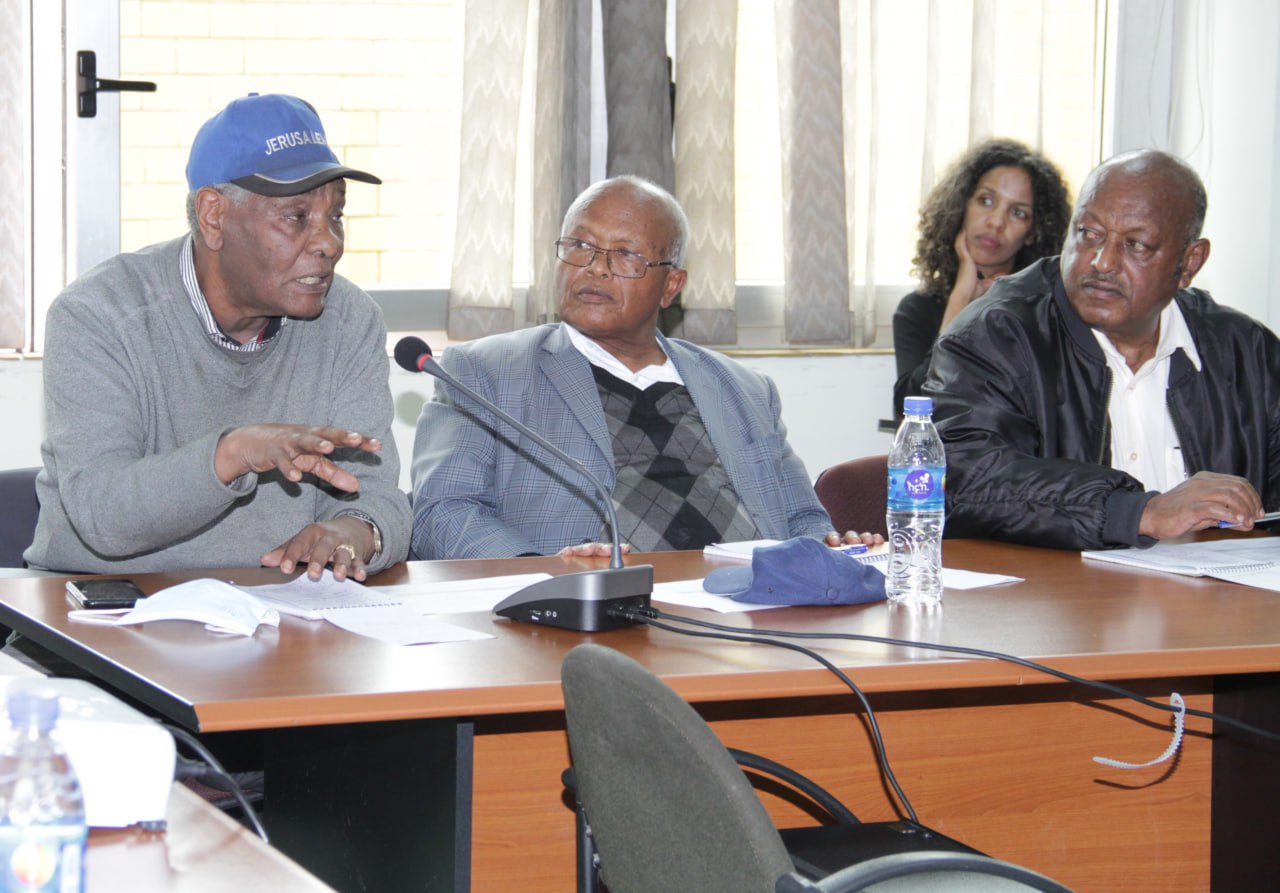
CCRDA conducted Policy Round Table Discussion on a study conducted on Seed Security Assessment. CCRDA Food Security and Environment Forum members and Members of FDRE House of People Representatives from Standing Committee of Agriculture and Rural Development attended the session. The discussion was held on October 2, 2024, at CCRDA Conference Hall. Regassa Feyissa (PhD) conducted the assessment.
In his keynote address, Nigussu Legesse (PhD), CCRDA Executive Director highlighted the importance of promoting genetic diversity and encouraging farmers to adopt local gene pools of traditional race, stating that “Adequate access to the preferred, good-quality seeds that are climate-resilient and nutrition-dense is essential to farmers’ food and livelihood security. These farming systems are important for food production and maintenance of genetic diversity but have so far been largely neglected”.

The Director added that “to decide on the most appropriate short and long-term seed related interventions, it is crucial to understand the local seed security challenges at grass root level. As a result, CCRDA has organized the platform to bring all stakeholders together to discuss the research outcomes and look forward to collaboration and collective actions in filling policy gaps”.
The assessment mainly focused on the functioning of seed channels that smallholder farmers use. At three selected sites: Ejere, Ejeresa lefo, and Dendi.
Regarding Ethiopia’s seed supply system, the researcher raised certain concerns. The primary difficulty with formal seed systems is that they are unable to meet the needs of most small-scale farmers who rely on a variety of indigenous crop types. According to the study, there are few to no formal crop varieties accessible for less favorable environments. Technologies in use are more suited to favorable conditions and do not meet the needs of farmers in marginal conditions.

An additional challenge for the seed supply system is a shortage of new crop varieties, as well as the low durability and stability of newly introduced varieties in diverse locations. According to the study, the potential of new formal crop types declines shortly after their release. In other instances, small-scale farmers are reluctant to adopt new crop varieties, due to the limited life cycle of some formal varieties.
The study claims that CSOs have a huge role in supporting the community on ensuring local seed security and contribute to increasing crop diversity on farms. according to Regassa (PhD), “they play roles in facilitating seed access and in building capacities, particularly in the intermediary seed flow systems. They support community-based and local seed business approaches which involve establishment of primary cooperatives and unions for achieving local seed security, with the aim to contribute toward ensuring local food security”. Some NGOs promote community seed banking systems that ensure local seed security and contribute to increasing crop diversity on farms.