Making the Horn Livable, Peace Beyond Boarder
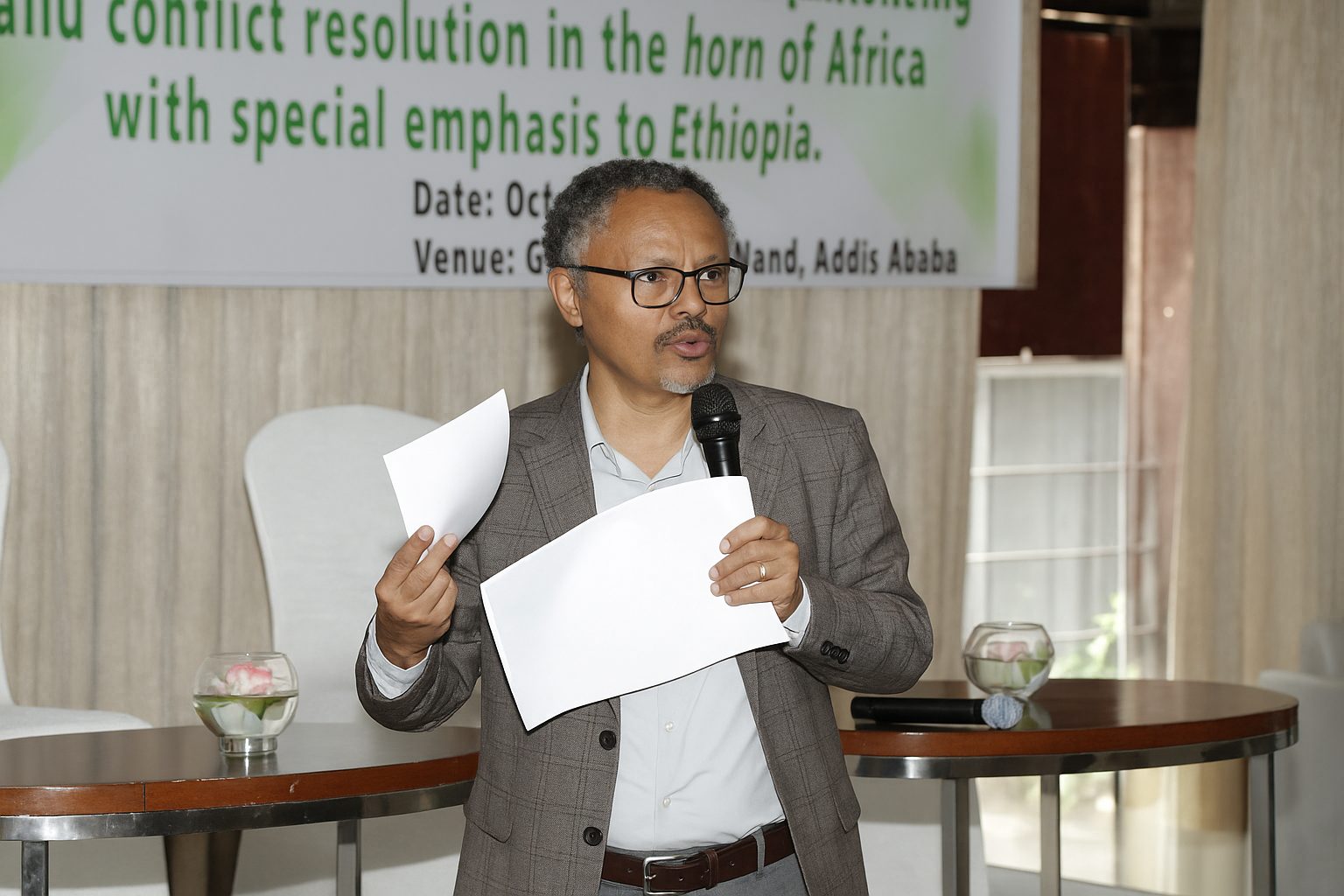
A high-level panel discussion on the Role of CSOs in Conflict Resolution and peace building in the Horn of Africa with Special Emphasis on Ethiopia were conducted by CCRDA in collaboration with American Friends Service Committee in Addis Ababa on October 25,2024.
The panel discussion was organized to draw the attention of member CSOs to the issue of peace building and conflict resolution and intended to increase their knowledge on the issues capacity and desire to take action to address peace building and conflict resolution within their communities.
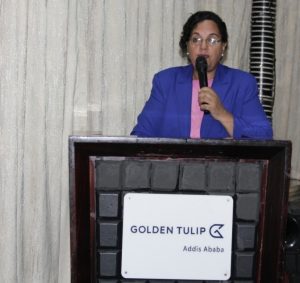
In her opening remarks Aynalem Ashebir, CCRDAs board Chairperson welcomed the participants and remarked that the discussion topic carries profound human, economic, social, political, and spiritual implications, particularly for the Horn of Africa. She expressed the paramount role of CSO’s in being a peace actor, capable of mobilizing communities, advocating for rights, and bridging gaps between the state and the people.
Ayinalem Ashebir, CCRDAs Board chairperson while making an opening speech
Even though, Said Ayinalem Ashebir, the pivotal role of CSOs, there is still a need to understand more deeply how, when, and under what circumstances civil society can most effectively support peace.
Finally, she remarked that the panel discussions will focus on how we, as civil society actors, can enhance our contributions to peacebuilding and stabilization in Ethiopia and beyond.
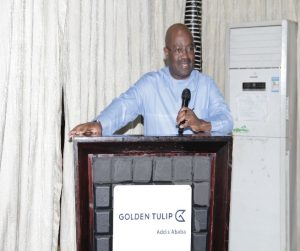
Moses Chasieh, Director, Salama Hub Program expressed that the topic is very interesting which concerned every individual because without peace the whole system becomes paralyzed. He added that Ethiopia as a country, which have many opportunities to cultivate peace. Establishing the Ministry of Peace is among them. He added that Ethiopia’s multi-cultural and indigenous knowledges should be harmonized and implemented for fostering peace and conflict resolution.
Moses Chasieh, Director, Selam Hub program while making a keynote address
Hundera Teferi, Program Manage, APCfC, in his presentation stated that the organization is currently operating in the East Borana and Borana zones of Oromia region, with cross-border activities in the Dukana District of Marsebit County, northern Kenya. Kenya-Ethiopia border has experienced a continuing degradation of the environment leading to food insecurity and increased competition for scarce resources mainly water and pasture. These phenomena have often resulted in cross-border conflicts among Borana and Gabra communities in Kenya,
Thus, APCfC, (has been engaged) in conflict resolution and peace-building projects for over a decade. The organization deployed mechanisms like establishing cross-border peace committees made up of elders, customary leaders, religious leaders, and prominent individuals, providing capacity-building training, mobile airtime and equipment, as well as support for refreshments and transport, enabling effective information exchange and address emerging conflict issues in timely fashion. supported and facilitated a dozen of cross-border peace dialogues, joint resources sharing by supporting the development of reciprocal resource use agreements and arrangements.
Tadesse Zeray, from compassion international presented Trauma healing Experiences in Tigray region. He presented the devastating effect of the war in Tigray, resulted in loss of many lives and left many disable especially women and children. He added that “the deepest scar of war is unseen”. Similarly, many people in Tigray experience trauma which was the driving force for compassion is to work in healing the unseen wounds. The organization, he explained in collaboration with different stake holders, gave psychological support for victims and planted hope for conflict survivors.
As Tadesse explained, the outcome of the engagement is that many children and civil servants are returned to school and workplaces respectively. He added that they begin to feel like they have a future life to live.