Reviving the Indigenous Frameworks of Peace
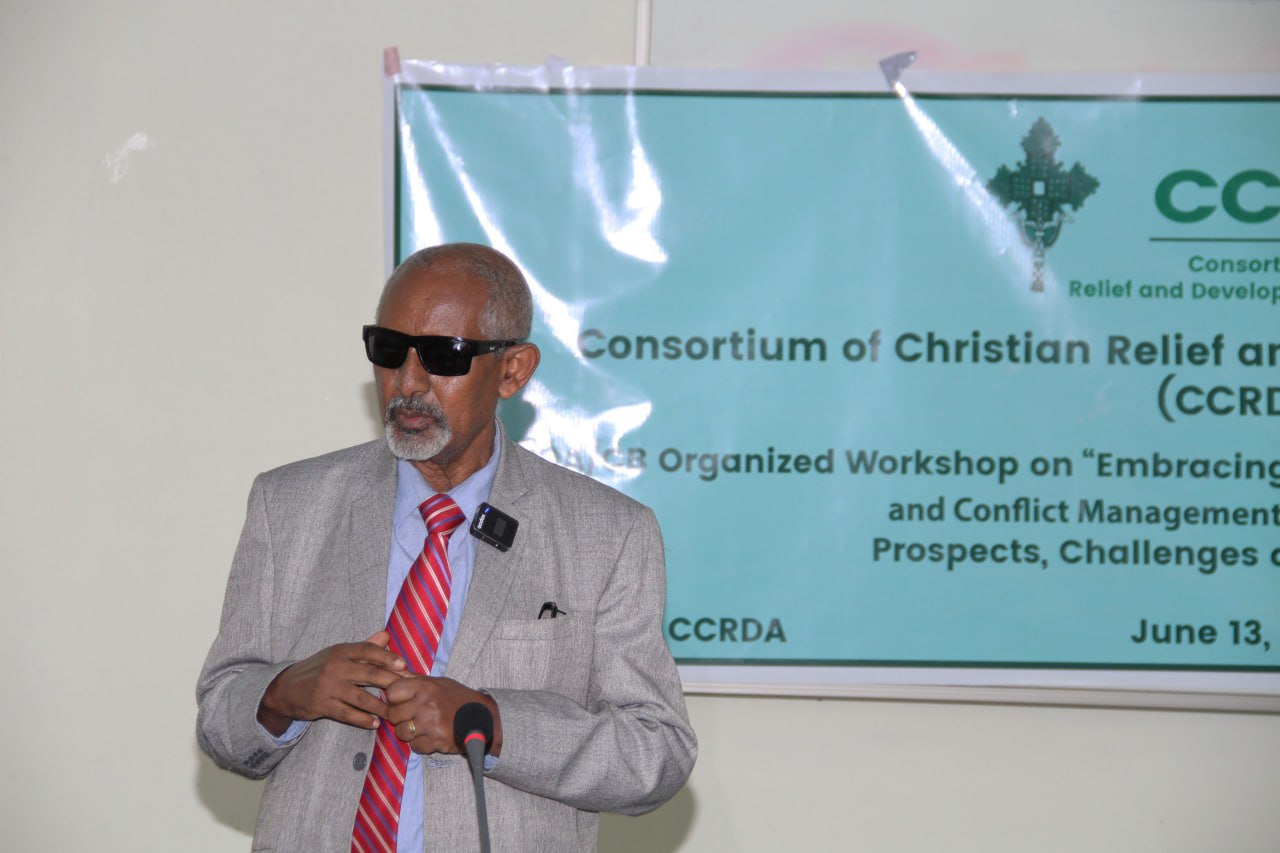
CCRDA conducted a workshop on “embracing the wisdom of Indigenous peace building Conflict Management Practices in Ethiopia”. The workshop took place on June 13, 2024, in the CCRDA conference hall.
CSOs, FBOs, Religious leaders, customary institutions representatives, elders from Amhara, Afar and Sidama Regions and experts from Ministry of Justice and Ministry of Peace attended the workshop.
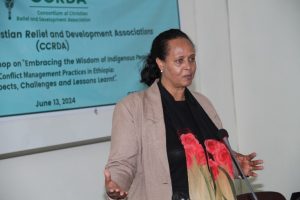
Tsehay Admassu, CCRDA, Senior Director, Program Development and Management Core Team
During the opening remark Tsehay Admassu, CCRDA, Senior Director, Program Development and Management Core Team stated that “Our country has an extensive record with utilizing traditional conflict resolution methods. We should endeavor to integrate ancient and modern ways to address current peace issues”.
The Senior Director added that “CSOs are expected to take part in conflict resolution efforts at national level such as in the National Dialogue Commission’s on ongoing effort. For this workshop, experts in the field and traditional elders come from various parts of the country, thereby helping us obvious insights for future endeavors”.
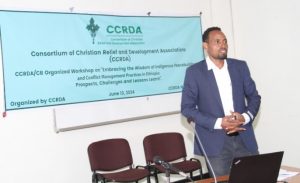
Geda Wakeyo, Researcher
An overview of the practices of Mad’aa institutions which employ a customary method to resolve disputes in the Afar region is presented by Geda Wakeyo.
According to the researcher, Mad’aa institutions have a long history by which the people of Afar have been governing themselves and ensured peace by living numerous values on daily basis.
According to the researcher, Among the people of Afar, the mad’aa institution (indigenous social-legal principles) governs human relationships and protection of animals. It is led by unwritten laws or principles communicated orally from older generation to the new generation.
The researcher stated that “the Afar people have a solid sense of admiration for the renowned customary rules and guidelines that derived from their ancestors. When misbehavior is noticed, reference is speedily made to such unwritten indigenous laws the basis of which is the normative framework and values systems deep-rooted in their custom from time immemorial.
According to the researcher, the key challenge is partiality of the decisions given by the customary institutions is , it is highly dependent on the skill and ability of the mediators. Democratization of the formal legal system has also its fair share of undesirable impacts on indigenous institutions. In effect, large number of people is addressing their cases via the modern legal system.
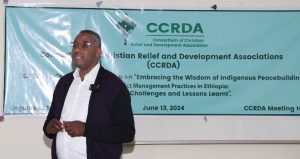
Hailu Tadesse, Expert, South Wollo Zone Culture and Tourism office
Hailu Tadesse, expert from South Wollo Zone Culture and Tourism office, gave highlights on a cultural judicial system known as Abegar, which was established to judge and adjudicate crimes ranging from simple to serious crimes in Amhara Region, South Wollo Zone.
According to Hailu, “The role of the Abegar system for the development of good governance by solving problems and reducing crime is important”.
The system gives Guma / compensation/ to make reconciliation is free from revenge. The expert puts some issues that are the main challenge for Abegar system. Increasing unemployment is attributed to increased crime and juvenile delinquency, rather than disbelief in the system. People instead of seeking the traditional reconciliation system tend to stress the judicial system.
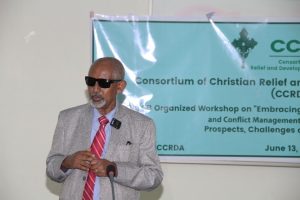
Le’ke hiruyawiyan Belay Mekonen, Chairperson, Amhara Region Traditional Elders Association
Le’ke Hiruyawiyan Belay Mekonen, chairperson of Amhara Region Traditional Elders Association, gave a presentation on traditional elder’s system and its benefits to demonstrate the value of existing mediation in Amhara Region.
According to the chairperson “Zewold Currently practiced in North Wollo Zone, is known for solving individual and social conflicts”. The elder stated that the system, when it is recognized and carried out by the elders and fathers the community respects, its merit. Nowadays, it is has sustained as a social system that is working for reconciliation and peace building.
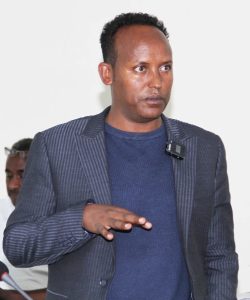
Yonas Mamo, From Tiruzer Ethiopia for Africa (TEA)
Yonas Mamo of Tiruzer Ethiopia for Africa (TEA) presented a presentation on the major conflict factors in the Gambella region’s Nuer zone. From September 2021 to 2023, his organization undertook the study in the Youth Voice-Ethiopia Project in the Nuer Zone.
Yonas shared his experiences on the significant conflict drivers in the project area, were hate speeches, dividing narratives, unfavorable gender norms, and reconciliation gaps.
Yonas explains what causes instability in the zone and attributed to factors, including ongoing conflicts unresolved on time, a lack of coordination among actors to engage the youth, and the reality that fertile land remains largely unproductive due to its allocation to inefficient investors.
Presenters and participants in the workshop concurred that, for indigenous institutions to fully participate in the process of conflict resolution and peacebuilding partnerships, they must be able to adapt to the modern context, considering the unique social, political, economic, and security contexts of each society.
Incorporating indigenous practices and customary laws into the formal education system and launching a clear legal and policy framework for the use of indigenous dispute resolution institutions were forwarded as recommendations to effectively utilize indigenous practices and customary laws for resolving conflicts. This is because most indigenous customs and practices are passed down orally from generation to generation and are neither inscribed nor codified.
The workshop emphasized that elders must serve as role models for the future generation, without partisan pretense and political allegiance and should continue to impart the wisdom to the new generation with the moral fabrics of the custom intact.