Local-SPACE 4th Co-Creation
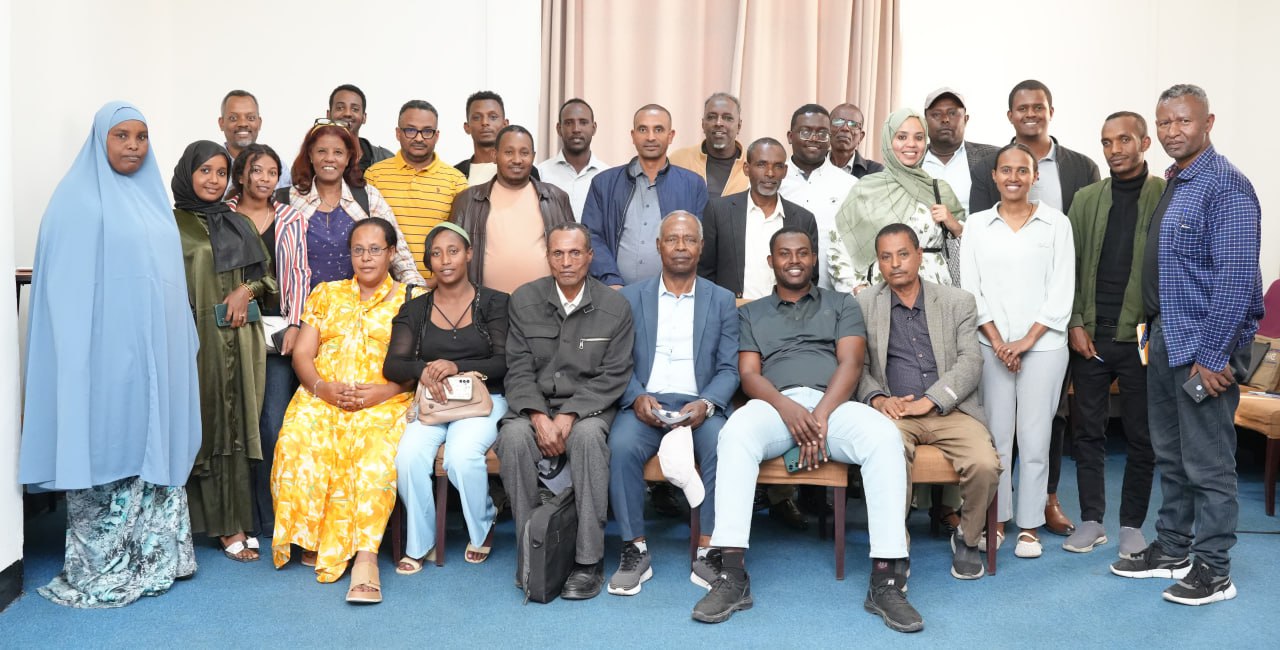
The “Local-SPACE: Enhancing the Space, Participation, Accountability, Capacity and Engagement of Local and National Actors in Humanitarian Aid Delivery” project, jointly implemented by CCRDA and CST-Ethiopia, held its 4th Co-Creation on 27–28 January 2026 at Tolip Hotel in Addis Ababa, Ethiopia.
Local-SPACE is a global initiative implemented in DR Congo, Iraq, Myanmar, Nigeria, South Sudan, and Ethiopia, aimed at driving system-wide change in line with global humanitarian localisation commitments by strengthening the capacity, leadership, and equitable participation of Local and National Actors (L/NAs) within the humanitarian system.
The 4th Co-Creation engaged Community-Based Organizations (CBOs) and Civil Society Organisations (CSOs) on key agenda items, including familiarisation with the Charter for Change (C4C) Passporting Tool, finalisation of the CCRDA Humanitarian Forum Advocacy Action Plan, introduction to the Local-SPACE Knowledge Hub hosted on Kaya, and discussion of resource mobilize strategies.
CCRDA and CST-Ethiopia introduced the C4C Passporting Tool, a practical mechanism pioneered by seven INGOs under the Charter for Change that advances eight foundational localisation commitments. The tool promotes harmonised due-diligence processes between national CSOs/CBOs and INGOs to reduce duplication, minimise transaction costs, improve efficiency, and encourage shared practices, while maintaining compliance and risk-management requirements. Extensive group sessions led by established L/NAs explored contextual adaptation of the tool, with participants highlighting challenges such as gaps in financial management, digital systems, and safeguarding capacities.
Participants emphasised Ethiopia’s local realities, including language barriers, limited access to technology, reliance on volunteer-based and human resources. Given that many CBOs operate through social capital, community trust, and voluntary labour, participants cautioned that rigid standards could result in exclusion. Recommendations stressed the need to contextualise and simplify the tool by translating it into local languages, keeping it technology-light, and supporting adoption through mentoring and trust-based facilitation by INGOs and national networks.
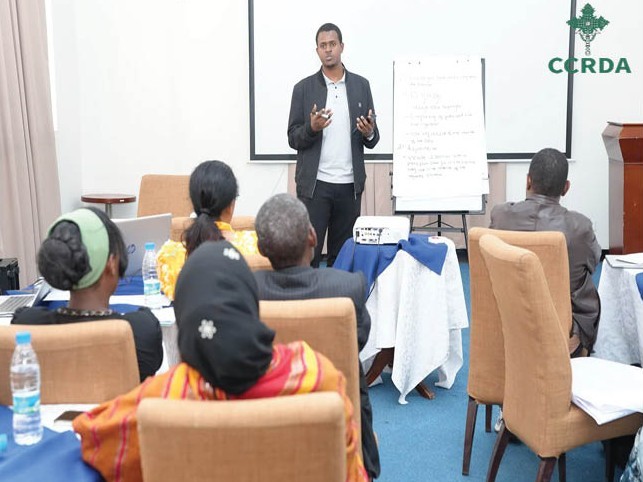
During the Humanitarian Forum Advocacy Action Plan session, CCRDA’s vital role as an umbrella organisation in coordinating collective evidence generation and amplifying CBO experiences for advocacy and visibility was emphasised. Evidence-based advocacy grounded in shared experiences of multiple local organisations was identified as key to demonstrating collective achievements and advancing collaborative system improvement. The action plan structured around has four strategic pillars which is Power and Decision-Making, Equitable Financing, Accountable Partnerships, and Policy and Localisation with aims to address systemic barriers within the sector and strengthen the ability of L/NAs to influence policy and funding decisions in line with localisation principles. Participants were thoroughly briefed on planned activities, with a strong focus on CBO-centred advocacy approaches.
The Kaya Local-SPACE Knowledge Platform was presented as a collaborative hub to collect, analyse, and share knowledge generated by CBOs and CSOs. Participants agreed on its strong potential to address L/NA capacity needs, tailor knowledge products to local languages and digital literacy levels, foster cross-country learning, and connect local practice to national and global localisation conversations.
The workshop also highlighted key resource mobilisation realities and opportunities. While most CBOs currently mobilise resources through internal partnerships and trusted mechanisms such as membership fees and asset management, awareness of emerging commitments and channels for direct funding to CBOs remains limited. Nevertheless, participants demonstrated strong dedication to their causes and a clear commitment to sustainable, internally driven resource mobilisation, underscoring the need for targeted guidance on accessing direct funding and diversifying financing pathways,
The workshop brought together a diverse range of participants from Amhara, Somali, Afar, Oromia, Gambela, Sidama, and Addis Ababa, with strong representation from women, youth and refugee-led organisations.