Where Climate Justice Meets Peace
Climate justice and peace are deeply interconnected. When communities face unequal access to natural resources, environmental pressures, and climate-related livelihood challenges, existing inequalities can deepen, and tensions can escalate. Building lasting peace, therefore, requires more than preventing conflict; it calls for fairness in resource distribution, inclusive decision-making, and collective action to address the effects of climate change.
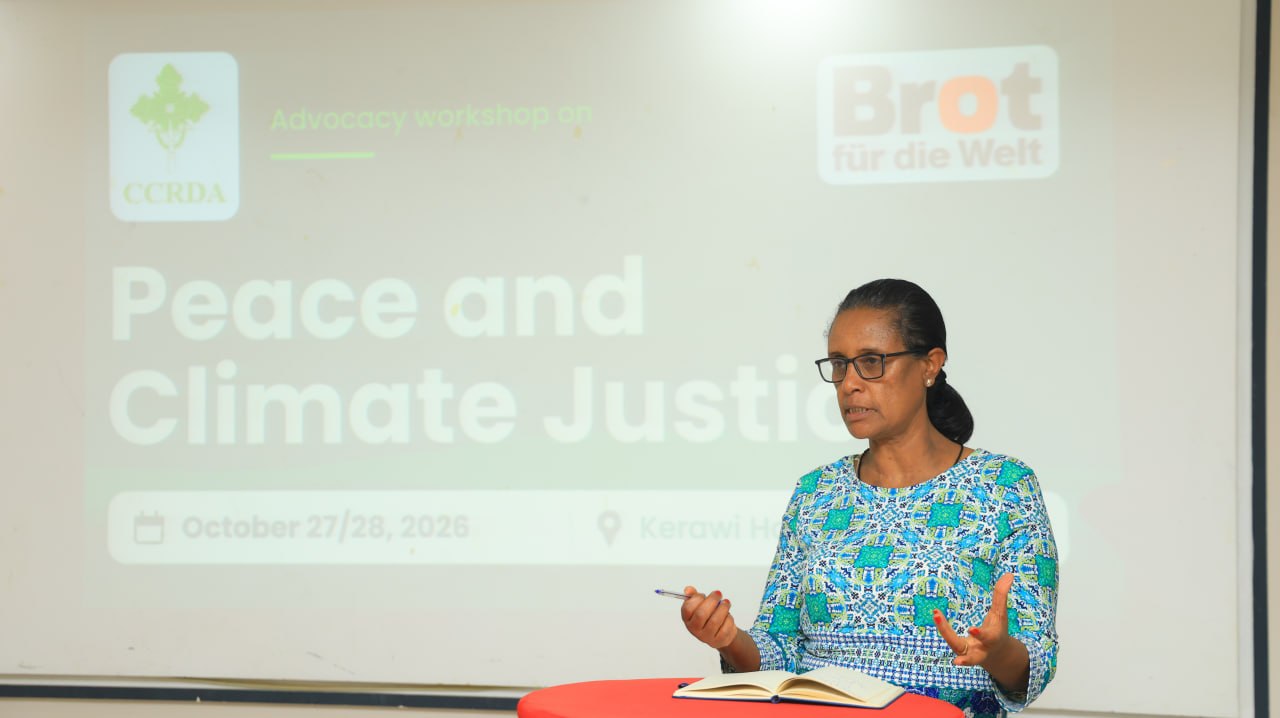
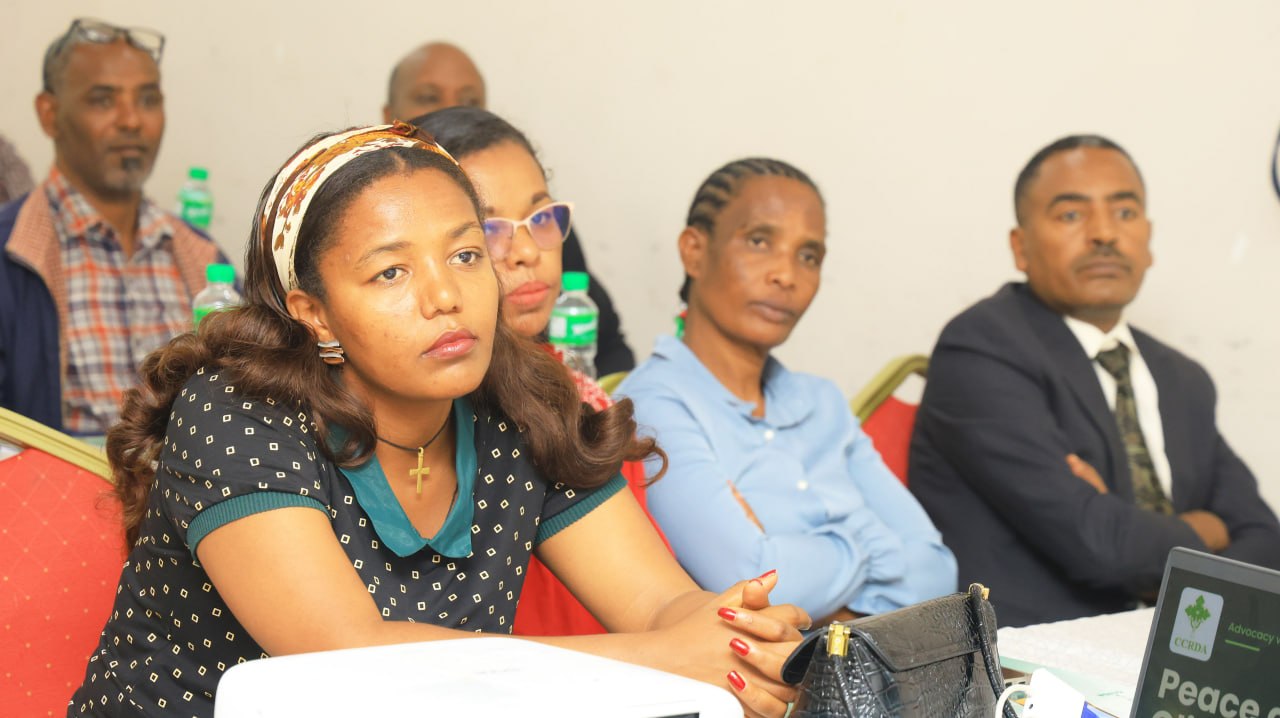
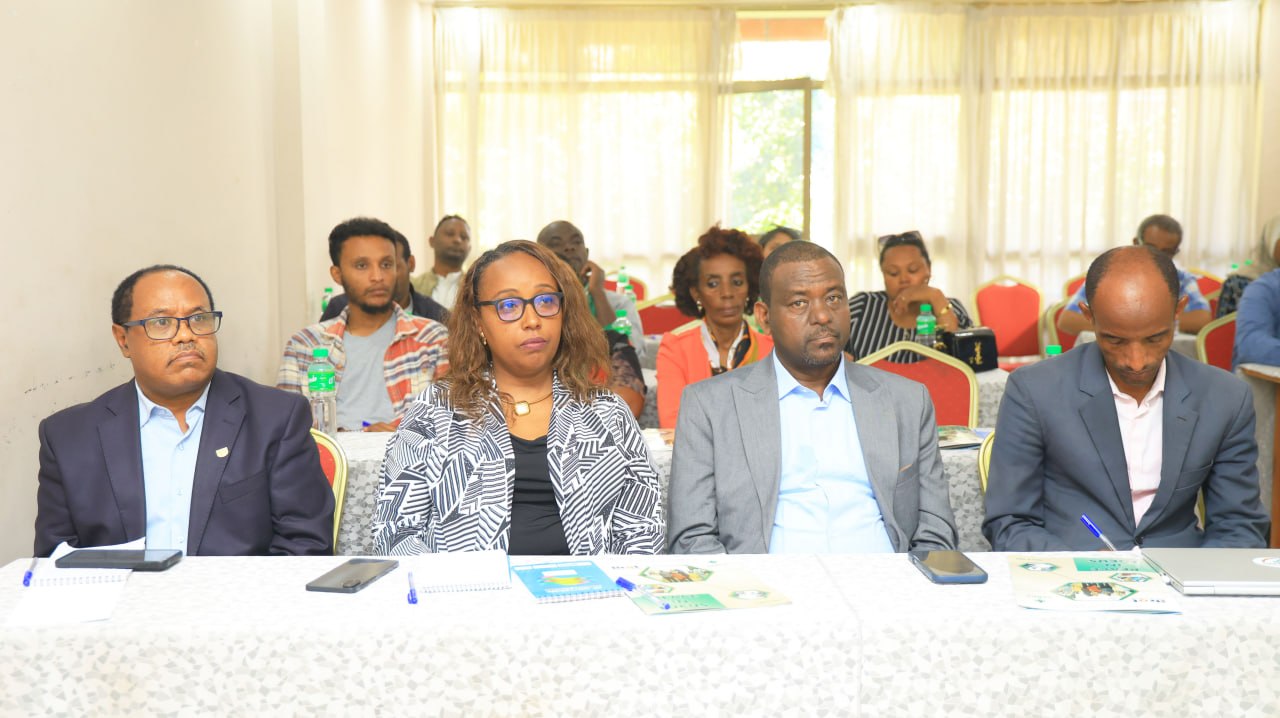
In response to these connections, the Consortium of Christian Relief and Development Associations (CCRDA), through its Hawassa Chapter Office, brought government institutions and civil society organizations (CSOs) together in Hawassa from October 27–28, 2026, to explore how climate justice can contribute to conflict prevention, social cohesion, and sustainable peace.
The workshop was officially opened by Ato Shitaye Chabola, Deputy Head of the Sidama Regional Finance Bureau. The gathering provides a platform for participants to examine how environmental pressures intersect with social, economic, and political realities and to identify opportunities for collective action.
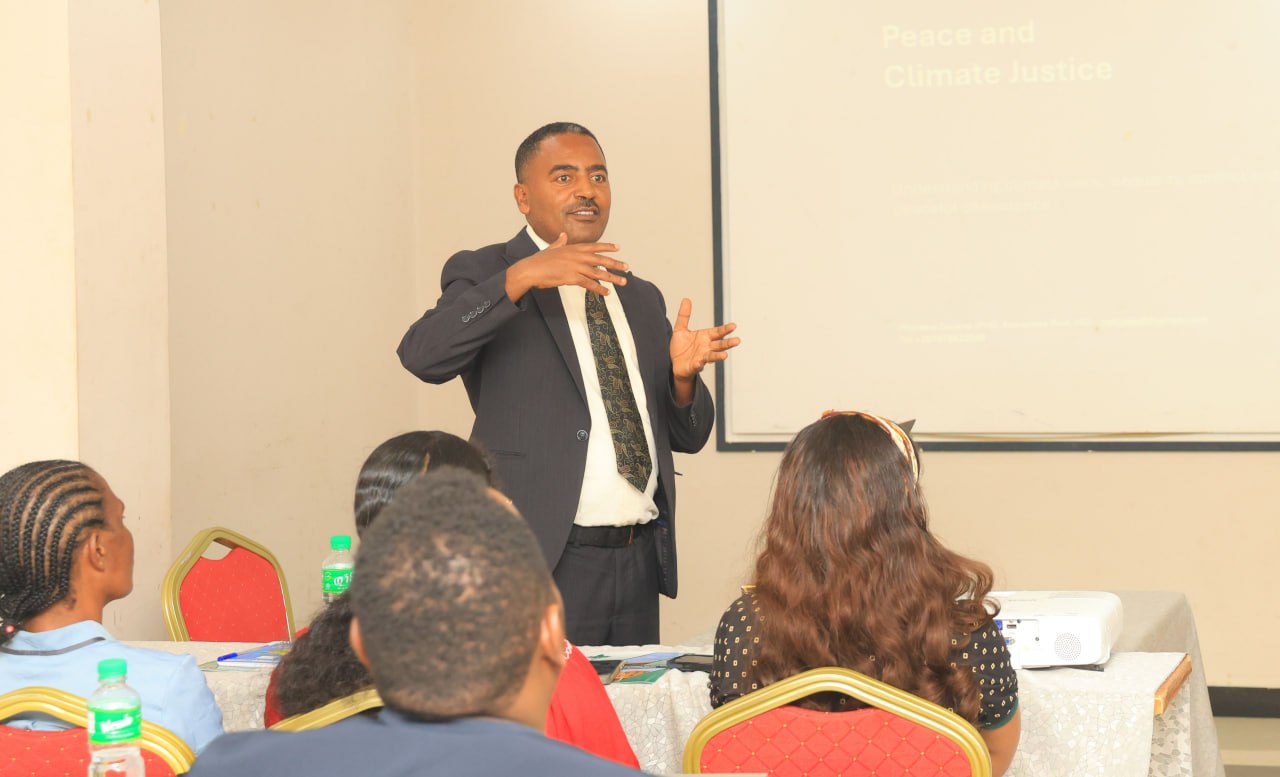
A key session was led by Melisew Dejene (PhD), Associate Professor at Hawassa University, who explored the fundamental concepts of peace and climate justice. His presentation highlighted how climate-related challenges, unequal access to resources, and existing social vulnerabilities can intensify tensions and contribute to conflict. He emphasized that climate change does not independently cause conflict but can exacerbate underlying inequalities and vulnerabilities, particularly where resources are limited and access to them is contested.
Building on these insights, participants engaged in group discussions to examine the major causes of conflict in Ethiopia across four dimensions: data, relationship, value, and structural conflict. The discussions helped participants explore how gaps in information, strained relationships, competing beliefs, and systemic inequalities can fuel tensions and violence, particularly in communities experiencing climate-related pressures.
Beyond understanding the causes of conflict, the workshop emphasized the importance of practical, collaborative responses. Discussions focused on strengthening government–CSO partnerships, advancing locally led climate adaptation, promoting fair access to climate finance, encouraging equitable resource distribution, and ensuring that environmental protection and development initiatives incorporate peacebuilding principles. Inclusive decision-making and meaningful community participation were also central to ensuring that climate responses address the needs and priorities of those most affected.
Through this initiative, CCRDA continues to strengthen the role of civil society in encouraging dialogue, bridging institutional partnerships, and advancing solutions to interconnected development and peacebuilding challenges. By bringing government institutions and CSOs to the same table, the workshop supports the importance of shared responsibility in building resilient communities where environmental sustainability, social justice, and peaceful coexistence go hand in hand.
Climate justice is inseparable from lasting peace. Building resilient communities means ensuring that resources are shared fairly, voices are heard, and no one is left behind.