
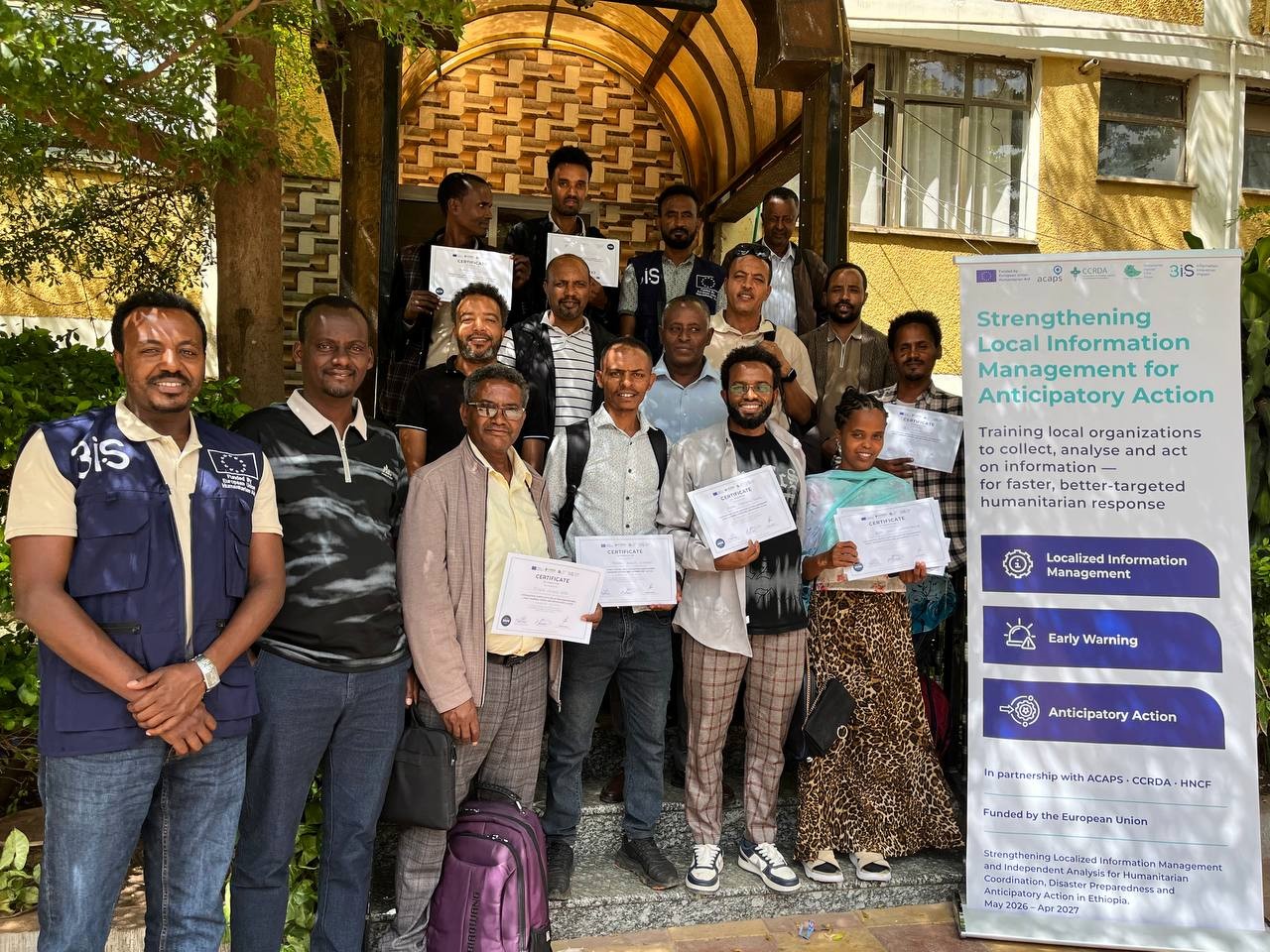
Rethinking Humanitarian Action in Ethiopia
Humanitarian action is strongest when local organizations and affected communities have the power, resources, and information to shape the responses that affect their lives. Advancing this vision, the Consortium of Christian Relief and Development Associations (CCRDA), in collaboration with the Ethiopian Humanitarian Network Coordination Forum (EHNCF) and 3iS, conducted a four-day training on Localization, Humanitarian Information Management, and Digital Early Warning Systems in Harar from October 21–24 , 2026. Organized under the Localized Information Management Capacity Strengthening Initiative, the training brought together representatives of local and national civil society organizations (CSOs) to strengthen their practical knowledge and skills in humanitarian localization, information management, emergency preparedness, and community-led early warning systems.
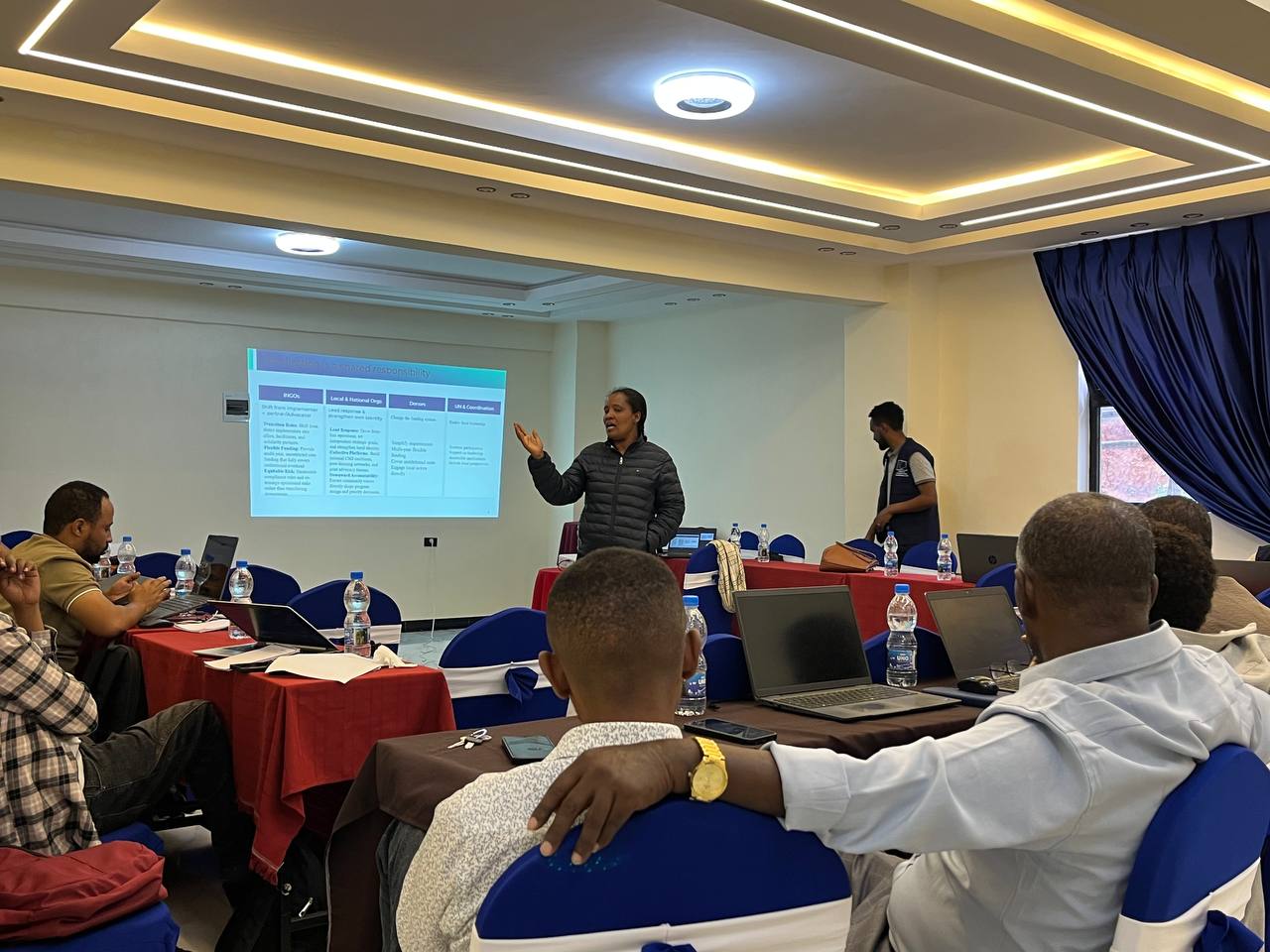
Recognizing that effective local leadership depends on access to reliable information, the training explored humanitarian information management, digital data collection, data quality, responsible data management, and anticipatory action. Participants received practical instruction on using KoboToolbox and other digital tools to collect, organize, and analyze data for evidence-based decision-making. These skills can help civil society organizations improve assessments, identify emerging needs, strengthen coordination, and support timely humanitarian responses. The sessions underscored that accessible, accurate, and timely information is more than a technical resource; it is a foundation for informed decision-making, effective coordination, and stronger local leadership in rapidly changing humanitarian contexts.
Beyond technical capacity, the training emphasized that localization requires more than transferring responsibilities to local organizations. It demands a fundamental shift in power, resources, and decision-making authority, ensuring that local actors and affected communities have a meaningful role in determining priorities, shaping programs, and influencing humanitarian responses. Participants examined how traditional, top-down approaches can limit local ownership and overlook communities’ knowledge and experience. In contrast, locally led humanitarian action recognizes communities not merely as recipients of assistance but as essential partners in identifying needs, developing solutions, and leading responses that reflect their realities.
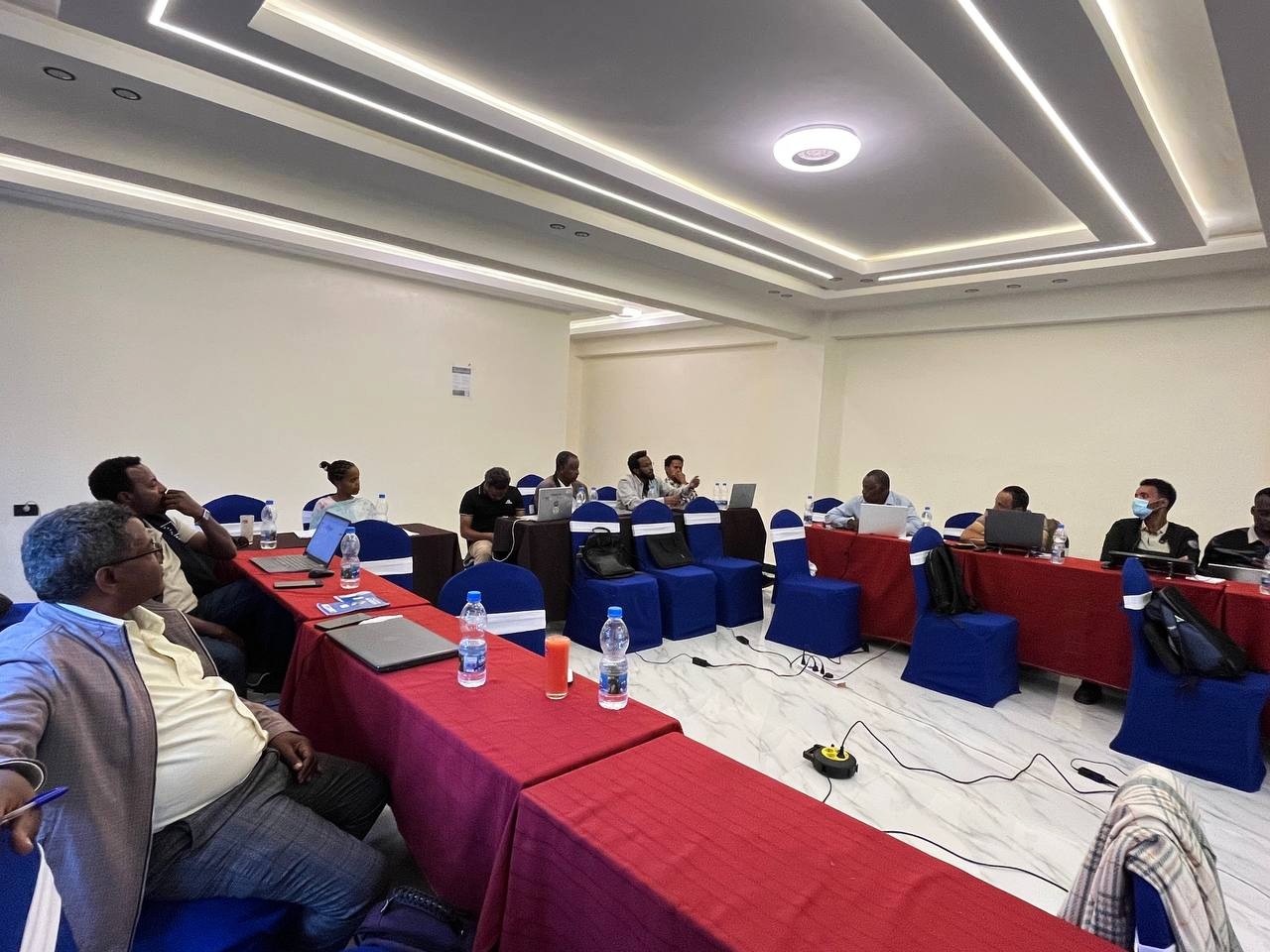
Discussions also highlighted the structural and institutional barriers that continue to hinder meaningful localization. These include unequal power relations, limited access to direct and flexible funding, externally designed programs, inadequate local representation in decision-making, and persistent misconceptions about the capacities of local organizations. Particular attention was given to the distinction between participation and genuine influence. Being invited to meetings, consulted during program design, or involved in implementation does not necessarily constitute meaningful localization. Real progress occurs when local actors have the authority to shape priorities, influence decisions, access and manage resources, and remain accountable to the communities they serve.
Turning localization commitments into meaningful action requires equitable partnerships and a collective willingness to transform established ways of working. Participants explored practical approaches to strengthening coordination, investing in local capacities, improving access to quality funding, recognizing local expertise, and expanding civil society representation in humanitarian decision-making mechanisms. The training reinforced that localization is a shared responsibility involving local and international humanitarian organizations, government institutions, and communities. By sharing leadership, resources, and accountability, these actors can create a more inclusive humanitarian system in which local organizations are empowered to contribute their contextual knowledge, respond to community priorities, and shape relevant, effective, and sustainable interventions.
The relationship between localization and early warning systems further highlighted the importance of placing communities at the center of humanitarian preparedness. Conventional early warning approaches often depend on information flowing from centralized institutions to communities, leaving local knowledge and lived experiences insufficiently integrated into risk identification and response. Community-led early warning systems offer a more inclusive approach by recognizing that people living in crisis-prone areas are often among the first to observe emerging threats and understand their potential consequences. By enabling communities to identify risks, interpret warning signs, share information, and take preventive action, these systems can strengthen preparedness and support timely responses. The training emphasized the value of integrating indigenous knowledge and traditional early warning practices with technical information and digital tools to develop systems that are locally relevant, accessible, and responsive to community needs.
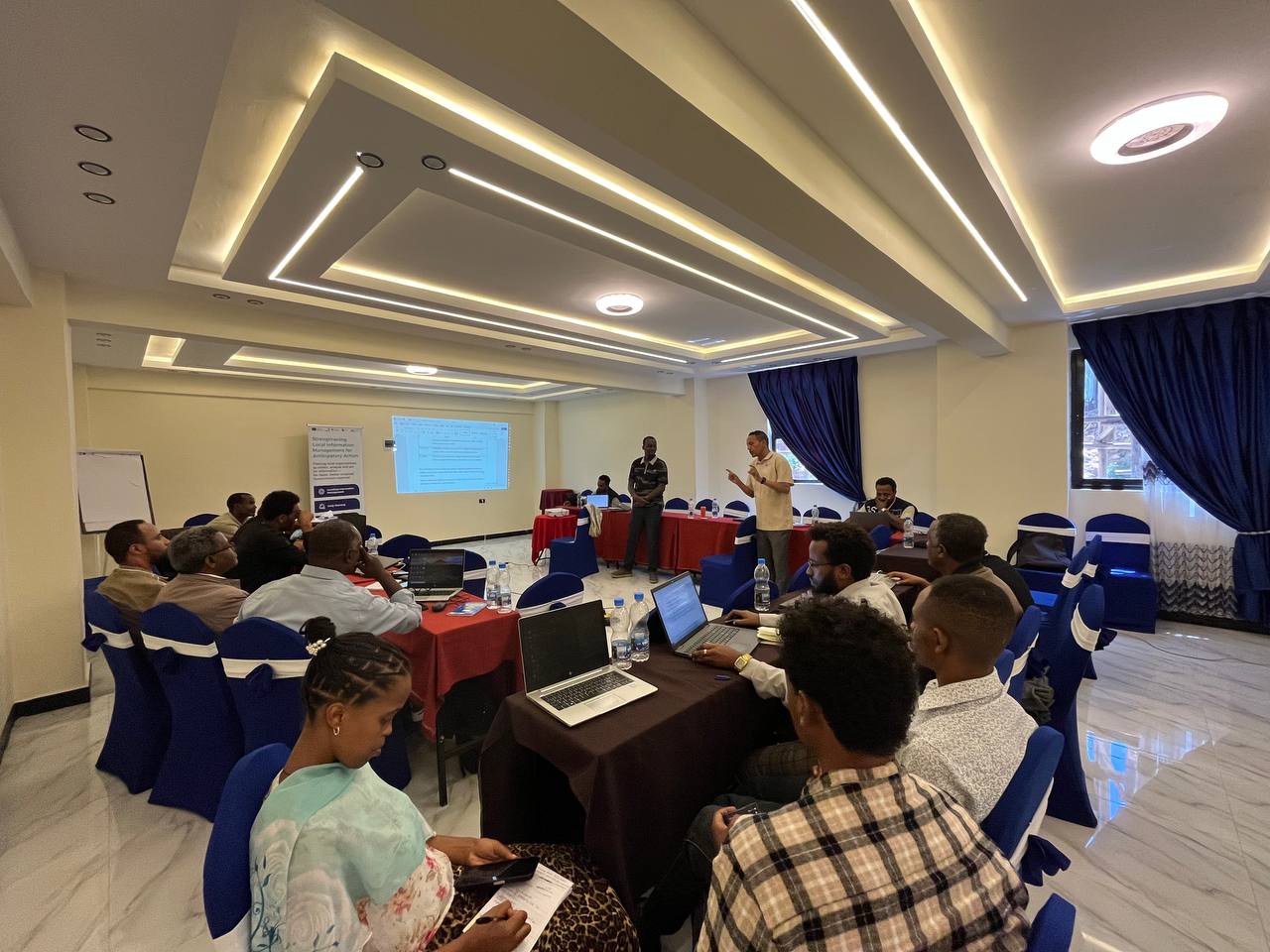
Throughout the training, the success of localization should not be measured simply by the number of local organizations participating in humanitarian programs but by the extent to which they can influence decisions, determine priorities, access and control resources, and exercise meaningful leadership. Localization is not a cost-saving measure or merely a transfer of implementation responsibilities. It is a commitment to making humanitarian action more equitable, accountable, effective, and sustainable by recognizing the expertise, agency, and leadership of local organizations and affected communities.
For CCRDA, advancing localization means strengthening civil society capacities, fostering meaningful partnerships, promoting access to reliable information, and supporting community-centered approaches to preparedness and response. Through initiatives such as this training, CCRDA and its partners continue to advance a more inclusive, locally led, and accountable humanitarian system in Ethiopia.