𝐁𝐨𝐫𝐝𝐞𝐫𝐬 𝐌𝐮𝐬𝐭 𝐍𝐨𝐭 𝐁𝐞𝐜𝐨𝐦𝐞 𝐁𝐚𝐫𝐫𝐢𝐞𝐫𝐬 𝐭𝐨 𝐏𝐫𝐨𝐭𝐞𝐜𝐭𝐢𝐧𝐠 𝐂𝐨𝐦𝐦𝐮𝐧𝐢𝐭𝐲 𝐇𝐞𝐚𝐥𝐭𝐡
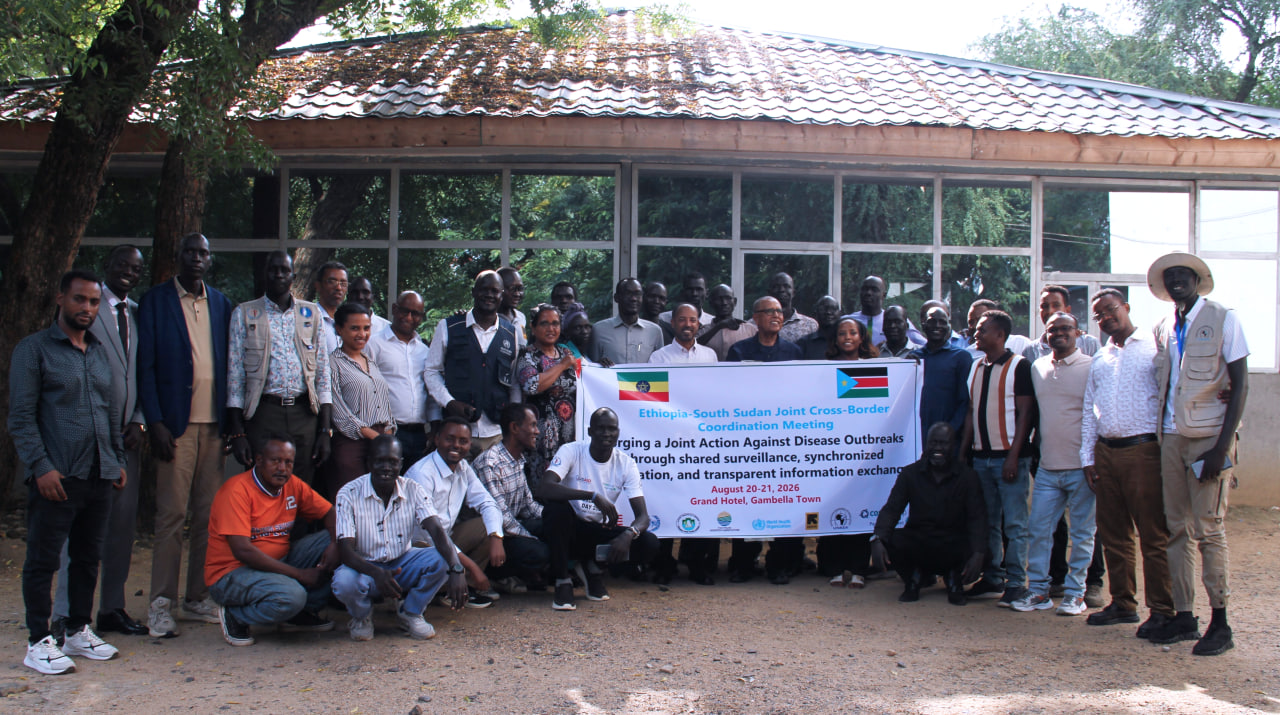
The Core Group Partners Project (CGPP) Ethiopia /CCRDA is convening the Ethiopia–South Sudan Joint Cross-Border Coordination Meeting from 20–21 August 2026 in Gambella.
The meeting brings together representatives from the national and sub-national health authorities of Ethiopia and South Sudan, WHO, EPHI, UN agencies, humanitarian and development partners, border health structures, livestock and fisheries sectors, and community representatives to strengthen government-led collaboration on shared public health risks.
Opening remarks highlighted the deep social, cultural, and economic ties connecting communities along the border and the importance of practical, government-led collaboration. Keynote addresses from Ethiopian and South Sudanese officials; WHO, the Task Force for Global Health, and CGPP emphasized the urgency of coordinated surveillance, immunization, preparedness, response, and One Health approaches.
Technical discussions have highlighted the need to connect Points of Entry with community-based surveillance, health facilities, local administrations, and cross-border health authorities. Participants emphasized that formal points of entry alone cannot capture population movement through informal routes, making community-based surveillance essential for timely detection and response.
The meeting has also reinforced the importance of a One Health approach, recognizing the interconnectedness of human, animal, and environmental health. Livestock movement and priority zoonotic diseases require stronger collaboration between human and animal health sectors through joint risk assessments, information sharing, and, where appropriate, coordinated outbreak investigations.
A high-level panel moderated by Mr. Legesse Kidanne, CGPP Ethiopia Director, brought together Dr. Tsion Niguse, EPHI Polio Surveillance Officer; Dr. Fikru Abebe, Task Force for Global Health Coordinator; Dr. Filimona Bisrat, Core Group Partners Project Global Health Advisor; and Mr. Riyang Maiyong, WHO Senior Surveillance Officer. The panel explored operational challenges, surveillance gaps, population mobility, One Health, technology, and opportunities for joint preparedness. Discussions converged on the need for stronger government-led coordination, timely information sharing, community-level surveillance, coordinated immunization, digital platforms for information exchange, and joint preparedness and response.
On Day Two, participants are undertaking a joint cross-border mapping exercise to identify formal and informal points of population movement and health service access. The exercise will provide an important foundation for strengthening surveillance, immunization, preparedness, response, and resource allocation across the border.
The meeting is expected to conclude with a clear and actionable way forward, including completion of the joint cross-border mapping, development of a shared plan of action, and strengthened surveillance and immunization systems.