
Services

Core objectives of CCRDA

  • Promoting partnership and programmatic alliances through dialogue and networking among members the government and other partners
  • Enhancing members development effectiveness and professional standard through capacity building measures
  • Facilitating the creation of enabling environment and emergency response through facilitation of access to resources
  • Ensuring ethical practice, accountability, and self-regulation of members
  • Strengthening the representation, coordination capacity and sustainability of the secretariat

Program and Institutional Capacity Building
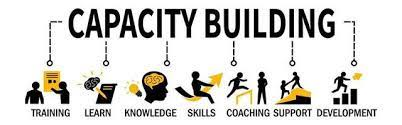
With the changes in focus from relief to development activities, the need of members for higher capacity in organizational development, leadership, constituency building and mainstreaming cross-cutting issues became apparent. As members engage in policy issues, greater capacity in good governance lobbying and how to handle sensitive issues are required. CCRDA seeks to meet these needs through a variety of capacity building initiatives focusing on the above areas as well as on internal control mechanisms, and ethics to ensure effectiveness, transparency, and credibility in all operations of member CSOs.

Capacity building support of CCRDA is thus provided based on a participatory member’s need assessment that identifies institutional and program capacity gaps

Training

CCRDA provides various training programs that focus on building capacities of staff of CSOs and government partners. Training programs are developed in partnership with local and international development consultants. Programs are also enriched with on the ground experiences of members and other CSOs including donor and government partners.

Institutional Strengthening Support

This is a type of support provided for members in the form of project professional secondment, equipment and facilities supply as well as financial assistance for associated training. (e.g., Computers lessons). Significant number of local CSOs have benefited from receiving multitudes of institutional strengthening supports.

Networking, Partnership and Policy Engagement

Since its establishment, CCRDA has served as a voice for its members at national and international forums. As a focal point for dialogue among and between members and with government, it has contributed to the gradual improvement of the working environment for the CSO sector. Several important achievements have been registered in various aspects of policy engagements and CSOs good governance.

Code of Conduct for CSOs in Ethiopia

One of the instruments for self-regulation in the CSO sector is the code of conduct for CSO that was developed by the CCRDA membership and served as the base for the Ethiopian civil society council’s code of conduct. This has led the sector to a level where accountability, transparency, and commitment to serving those in need and to supporting development efforts are the basis of its engagement.

Policy Dialogue

CCRDA serves as a focal point for consultation within CSOs, in articulating the role and contribution on CSOs in the implementation of pro-poor policies. It also seeks to link its membership with Africa and global societies for consultation on common policy-related issues. It has contributed to various national and international initiatives and its inputs to various strategic documents and national strategies such as the poverty reduction strategic paper, the National Food security strategy, the National Youth policy, HIV/AIDS strategy.

Regional Presence

To facilitate the work of CSOs in regions, CCRDA is implementing a chapter approach. According to the chapter approach, a host CSO selected from each region and a staff of that CSO serves as a focal person and devotes at least 16 hours in a month to coordinate the CSOs in that region and provide the service of CCRDA.

capacity building support

The areas of capacity building support include:

  • Mentoring/backstopping,
  • Limited staff secondment for start-up local members’
  • Technical and financial support for fundraising, promotional activities, project development and monitoring.
  • Organizational development of members’
  • Organization of apprenticeship and experience sharing visits,
  • Facilitation of members’ engagement in community empowerment, and;
  • Facilitation of mainstreaming of cross-cutting issues.

 

error: Content is protected !!