CCRDA conducted an Advocacy Workshop on the Current Expanded Program on Immunization (EPI) and Circulating Vaccine-derived Poliovirus Type 2 (CVDPV-2). The session was held on June 20, 2024, at the CCRDA conference hall.
The workshop aimed at updating CSOs on contemporary immunization policy and practices in Ethiopia. CCRDA’s Ethiopian Civil Society Health Forum members attended the session.
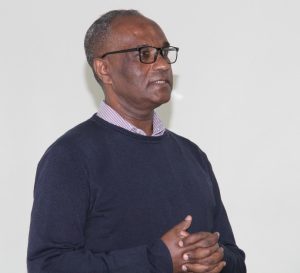
Mesfin Nigussie, Senior Advocacy Advisor, Save the Children in Ethiopia
Mesfin Nigussie, Senior Advocacy Advisor at Save the Children in Ethiopia, stated in his opening remarks that immunization is an essential necessity for everyone. As CSOs, it is crucial to see how we integrate our efforts with government initiatives addressing vaccine issues, the advisor added.
The adviser Furthermore stated that “this kind of sessions are helpful for creating a joint voice to advocate for our children and bringing the attention to lawmakers, decision makers, and other stakeholders as they address current immunization issues”.
Habtamu Tilahun an Expert, from Ethiopian Public Health Institute vaccine-preventable disease (VPDs) team gave a presentation on VPDs surveillance and recent detection of Variant poliovirus (cVDPV2 cases). According to the expert, Global Polio Eradication started in 1988 and Ethiopia has been implementing since 1997.

Habtamu Tilahun, Expert VPDs Team, Ethiopian public Health Institute
He stated that “last indigenous polio case was reported in Ethiopia in 2001”. He additionally stated that, “But we suffered with lots of imported WPV1 cases between 2004 and 2014 from Somalia and Sudan. Ethiopia got the polio free status certification in 2017”.
The expert gave recent cVDPV2 Epidemiology status. He stated that Since May 2019 Ethiopia have been experiencing cVDPV2 outbreaks. According to Habtamu, the first case reported from Bokh woreda of Somali region which was associated with a case from Somalia and expanded to other parts of the country. Since then, the country reported 70 cVDPV2 cases. According to the expert, In May 2024, Ethiopia detected five cVDPV2 cases from three regions and the latest onset being 4/6/2024 from Gambella region, Nuer zone-Lare woreda.
Regarding the challenges and gaps the expert notified that global shortage of novel oral poliomyelitis (polio) vaccine type 2 (nOPV2) vaccine for timely outbreak response. For instance, Global team allocated less than 1,000,000 dose of nOPV2 vaccine for Ethiopia in August and September 2024.
According to the expert, security issues are the most significant impediment. The expert further stated that in border nations plagued by cVDPV2 outbreaks (South Sudan, Kenya, and Somalia), any informal crossings from adjacent countries may pose a significant risk to the country. Other issues include a lack of cross-border coordination among bordering countries.
Regarding the roles of CSOs in Polio Surveillance and Outbreak Response, Habtamu remarked that CSOs supported capacity building efforts for front-line health workers, raising awareness and advocating on the necessity of vaccines in the community, and assisting with the implementation of community-based surveillance.
Mulat Nigus, Immunization Service Desk Expert at the Ministry of Health, presented on Expanded Program on Immunization (EPI) implementation in Ethiopia, including performance, success, challenges, and future strategies.

Mulat Nigus, Expert, Immunization Service Desk, MoH
He noted that “Ethiopia has made tremendous progress in reducing morbidity and mortality from vaccine-preventable diseases (VPDs). And Ethiopia in addition to Controlled COVID19 pandemic also have registered remarkable achievements on seven new vaccines into the immunization program since 2007 and reaches 13 antigens”.
Ethiopia is certified and maintained WPV-free status, as well as validated and maintained Maternal and Neonatal Tetanus Elimination (MNTE) status. Furthermore, the expert stated that Ethiopia is on track to gradually introduce new vaccines.
According to the expert, the key challenges are limited resources, particularly the budget for outreach vaccination services, as well as interruptions in vaccination services due to conflicts and climate change.
The expert also mentioned staff inadequacy, high trained staff turnover at all levels, discrepancy and exaggerated-reporting, data quality issues, and infrastructure challenges during the discussion.
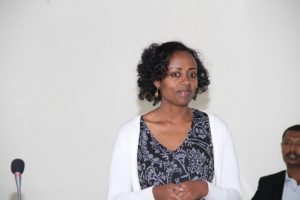
Mieraf Solomon, Immunization Program Director, Save the Children in Ethiopia
Mieraf Solomon, Immunization Program Director at Save the Children in Ethiopia, highlighted their involvement with the country’s immunization program as well as an overview of EPI at the national level.
According to the director, regarding the EPI, she stated that Ethiopia is one of the top 10 countries with the highest number of zero-dose children globally. ranking 2nd with 1.146 million zero-dose children based on WHO/UNICEF Estimates of National Immunization Coverage (WUENIC) estimate 2022.
The director shared brief highlights of Save the Children’s programs to address zero dose/under immunization. According to the director, Save the Children has been supporting immunization programs in Amhara, Somalia, Afar, Oromia, Gambella, and Tigray regions for over a decade.
The director gave highlights on Mobile Health and Nutrition Team (MHNT) and Integrated Outreach at country level. She states that, currently, Save the children Ethiopian running nine MHNTs, and Health and Nutrition service is active in six regions.
Regarding the recent status of MHNT at the national level, the director stated that “MoH implemented new reforms in 2022 and established a new department to ensure the quality and equity of health services. MHNT is one of the major strategies proposed to ensure health service equity, and following the reform, the ministry developed national MHNT guidelines”.
According to the director, the key challenges for improving the quality of MHNT services at the national level are natural barriers to access, a shortage of referral mechanisms, data management and recording, security concerns, and WASH and IPC hard-to-reach areas.